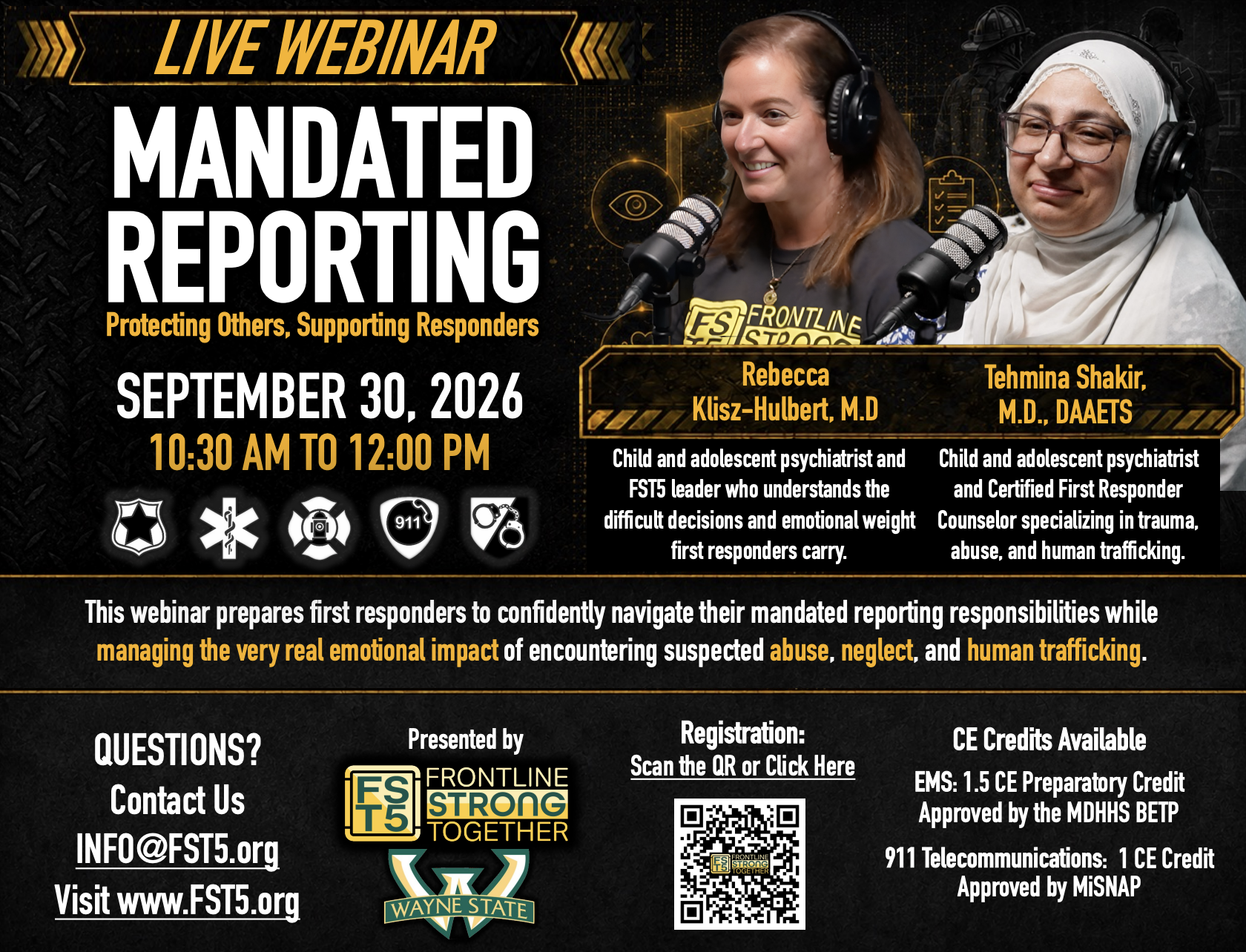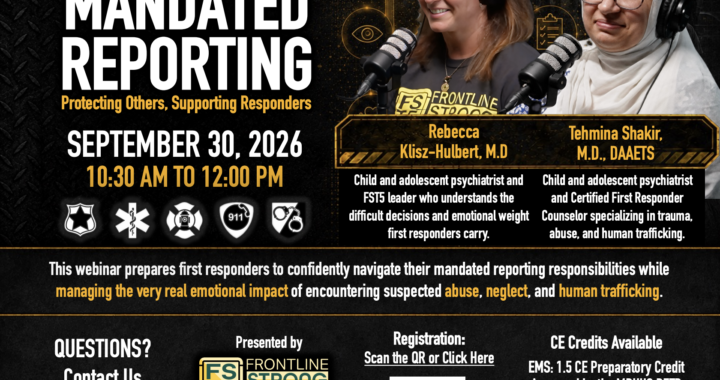
This webinar prepares frontline professionals to recognize and respond to potential child abuse, neglect, and human trafficking encountered during routine and emergency interactions. Using a practical, trauma-informed approach, participants will understand how trauma can influence behavior and disclosure, how to communicate without leading or investigating, and how to document and report concerns based on their professional role. The session also explores the immediate and long-term effects these encounters can have on frontline workers, offering practical guidance on staying grounded, recognizing ongoing impacts, and accessing peer, clinical, and wellness support. The goal is to foster confident, compassionate action that ensures safety, maintains dignity, connects individuals with appropriate resources, and supports responder well-being.
📅 September 30, 2026
⏰ 10:30 AM to 02:00 PM
Learning objectives
At the conclusion of this webinar, participants will be able to:
Recognize how exposure to child abuse, neglect, trafficking, and difficult disclosures may affect frontline workers and identify practical ways to manage that impact and access support
Recognize common warning signs of child abuse, neglect, and human trafficking.
Describe the frontline worker’s role when something raises concern, including the difference between reporting a concern and conducting an investigation.
Identify the appropriate reporting steps and available resources based on the situation and the frontline worker’s professional role.
Presenter information:
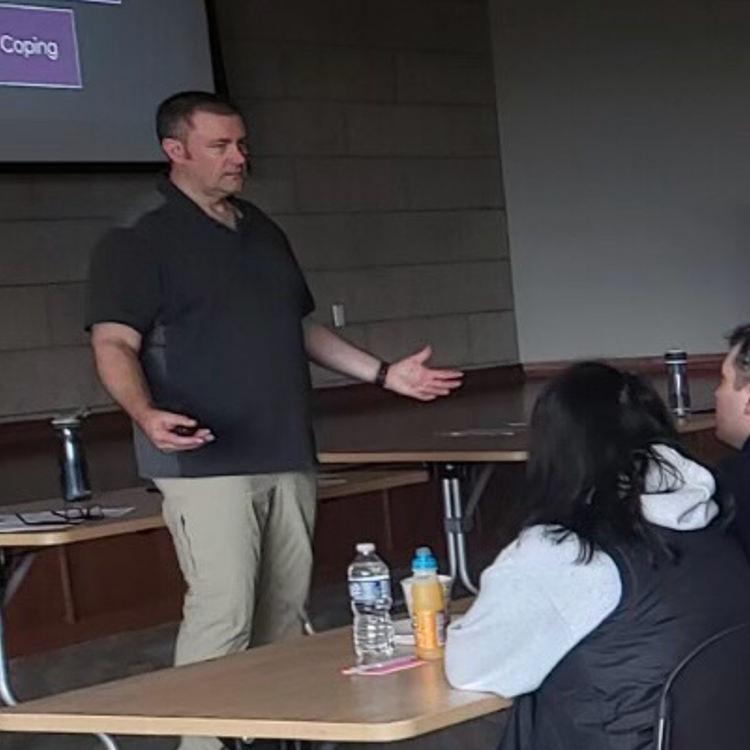
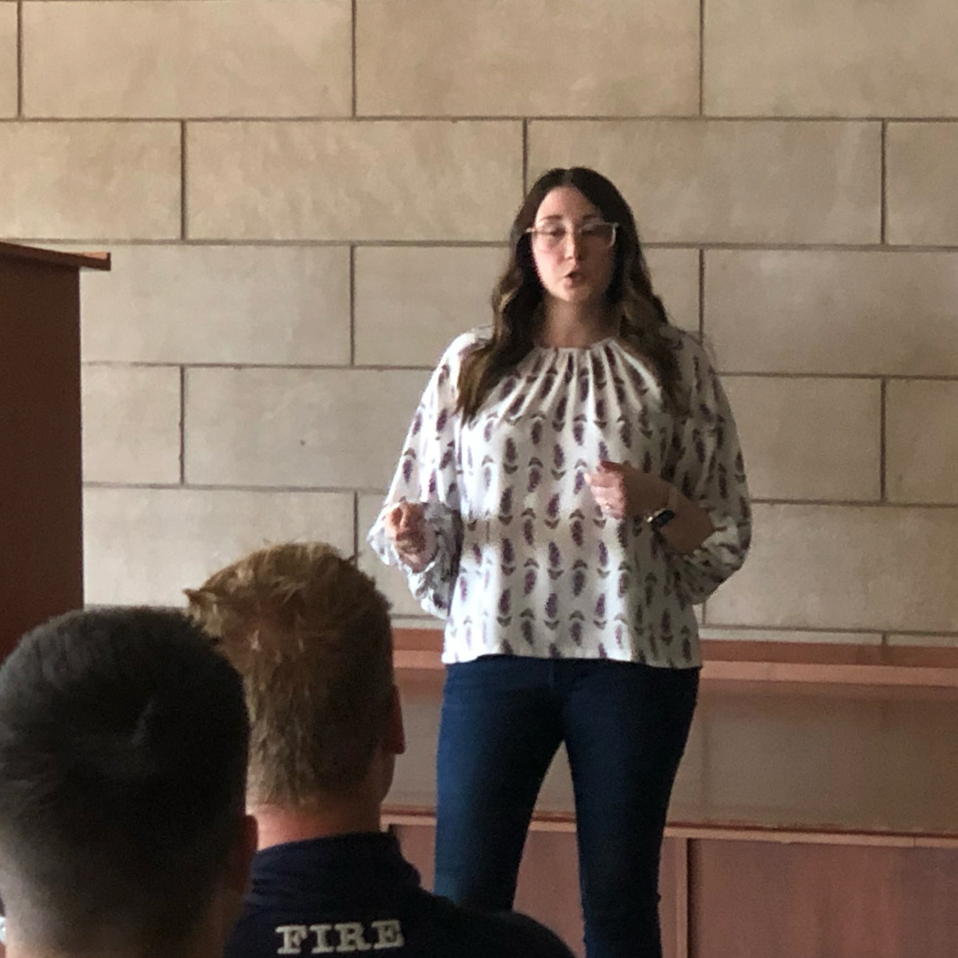
· Tehmina Shakir, M.D., DAAETS, Assistant Professor (Clinical), Wayne State University School of Medicine, Department of Psychiatry and Behavioral Neurosciences; child and adolescent psychiatrist, Wayne Health; Diplomate, American Academy of Experts in Traumatic Stress, with extensive teaching and training experience in childhood trauma, sexual abuse, human
trafficking, trauma-informed care, and first responder cultural competency.
· Rebecca L. Klisz-Hulbert, M.D., Associate Professor (Clinical), Wayne State University School of Medicine, Department of Psychiatry and Behavioral Neurosciences; child and adolescent psychiatrist; Tamara van den Bergh Ferguson Endowed Chair in Transdisciplinary Psychiatric Education.
· Geoff Lassers: Paramedic, EMS I/C 1480924, will serve as host and moderator.
Who This Is For: Law enforcement officers, firefighters, EMS providers, correctional officers, and 911 dispatchers across Michigan.
Continuing Education (CE) – This webinar is approved for the following:
- Continuing Education Credits: 1.5 Hours (90-minute webinar) Preparatory
- All EMS License Levels: MFR, EMT, AEMT, and Paramedic
- Participant Evaluation Method: Participant understanding will be reinforced through instructor-led discussion and audience interaction during the webinar. No formal evaluation of participants will occur
The FST5 Program is diligently working toward continuing education credits for law enforcement, corrections, and the fire service.